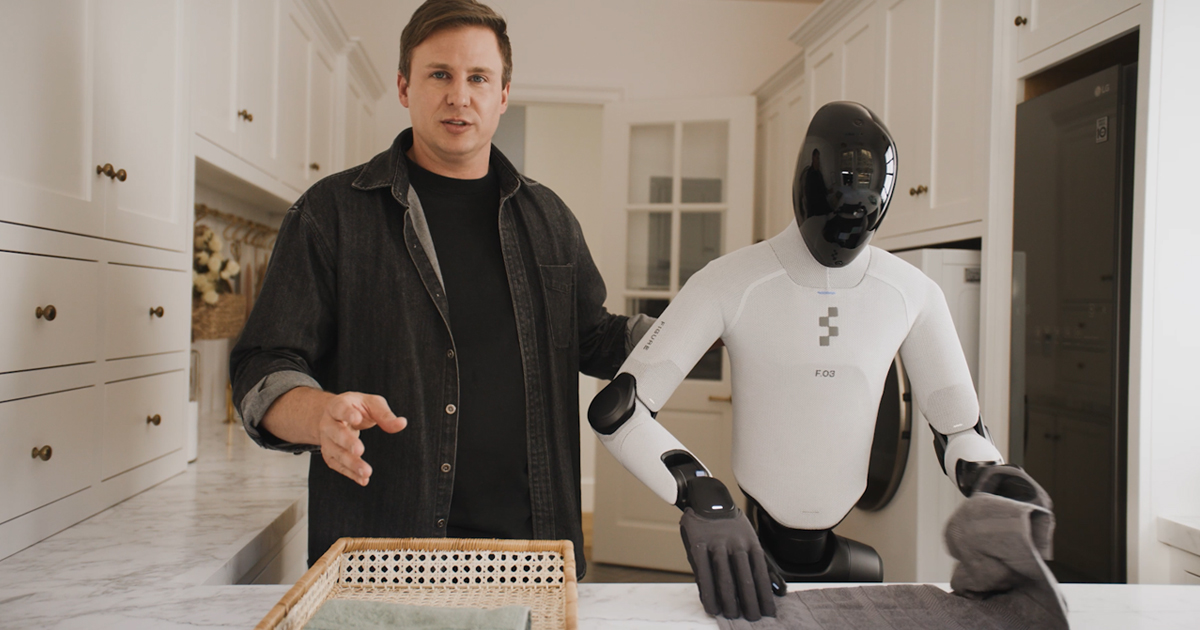
1X's NEO product page describes basic autonomy for early owners and scheduled Expert Mode, through which a remote specialist can guide unfamiliar chores. This is a clear example of why a humanoid should be evaluated as a service as well as a machine. A task completed with remote assistance can still be useful to its owner, but it is a different achievement from the robot completing the same task independently. The distinction belongs in any account of performance. 1X NEO product and Expert Mode.
Remote help has more than one purpose
Guidance can help finish today's chore, gather training experience or diagnose why a behavior failed. Those purposes overlap but are not identical. A successful assisted task demonstrates the combined human-and-robot system. It does not by itself demonstrate that the robot has learned to repeat the task without help. A useful service record should therefore distinguish direct intervention, supervised execution and subsequent independent attempts. Without those categories, the system can appear to become more autonomous simply because assistance is less visible.
1X's Redwood material describes a learned control model, while its broader AI page discusses the company's developing model approach. These sources establish the technical direction the supplier describes, not a complete independent record of home performance. They also show that the software story can change while the customer continues to own the same body. A household should be able to understand which capabilities are available now, which depend on remote support and which remain a development goal. 1X Redwood AI; 1X artificial-intelligence approach.
The home changes the supervision problem
A factory can define access zones, schedules and a limited family of objects. A home contains private conversations, personal possessions and people who did not necessarily arrange the robot's next task. Remote assistance therefore has an information dimension as well as a control dimension. The operator needs enough context to help, while the household needs to know when help is active and what information is being used. A camera view that is necessary for manipulating laundry may include unrelated personal detail. That is a design issue in the service, not merely a matter of the robot's appearance.
Availability matters too. A scheduled expert can be a reasonable way to support a new capability, but it cannot be treated as instant autonomous response. The household's experience depends on booking, waiting, communication and the frequency with which assistance is needed. These factors affect the cost of completed work and the kinds of tasks for which the service is practical. A robot that reliably performs a small set of independent chores may be more useful day to day than one that can attempt many chores only with substantial coordination.
The honest measure is assisted and unassisted work
NEO's explicit Expert Mode makes it possible to ask more precise questions than whether the robot is autonomous. How much of a task is independent? When does assistance begin? Can the robot recognize that it needs help before causing a problem? Does the next attempt require less support? Those measures can show real progress while acknowledging the people who make the service work. The wider implication for humanoids is that teleoperation should be visible in the operating model, rather than treated as an embarrassing detail or silently counted as machine capability.
A person remotely guiding a robot can be collecting training examples, assisting with an exception or carrying out the task itself. Those arrangements have different implications. A clear account of humanoid autonomy should identify which role human control played rather than treating teleoperation as either a disqualifying secret or an irrelevant detail. ALOHA 2 describes hardware designed for bimanual teleoperation. ALOHA 2 research paper.
Distinguish teaching from operating
During training, human demonstrations can provide examples of the behavior researchers want a model to learn. During operation, remote intervention can be a practical way to resolve uncertainty. Neither description establishes how often the deployed system can complete work without assistance; that requires separate measurement.
Reports should distinguish autonomous execution from the support surrounding it. A robot may perform the visible motion independently while a person selects the task, resets the scene or resolves failures between attempts. Those contributions matter when a demonstration is used to suggest production readiness. Open X-Embodiment pools robot-learning data across multiple robot embodiments. Open X-Embodiment research.
Count the intervention burden
The operational metric is the human burden, including duration and timing. A brief intervention during a quiet period differs from several robots needing help simultaneously. A service plan should explain what happens when the remote operator is unavailable and how the local team recognizes that condition.
Transparency about assistance makes comparisons fairer. It allows customers to evaluate a supervised service on its actual merits and researchers to show progress in reducing particular kinds of intervention. The useful goal is an honest description of the remaining work, not an all-or-nothing label that obscures how the system functions.
The learning claim needs its own follow-up evidence. An expert guiding a task today does not establish that tomorrow's autonomous attempt will improve, nor that an improvement will transfer to a different home. A service can be useful while that learning process remains incomplete. Reporting the assisted work and the later independent result separately would let customers see whether they are buying immediate help, contributing training experience or receiving an increasingly capable autonomous product. Those are related benefits, but they should not be blurred.
Sources & evidence
This archive preserves its original editorial date. Sources describe the events and announcements discussed; they do not establish today’s status.