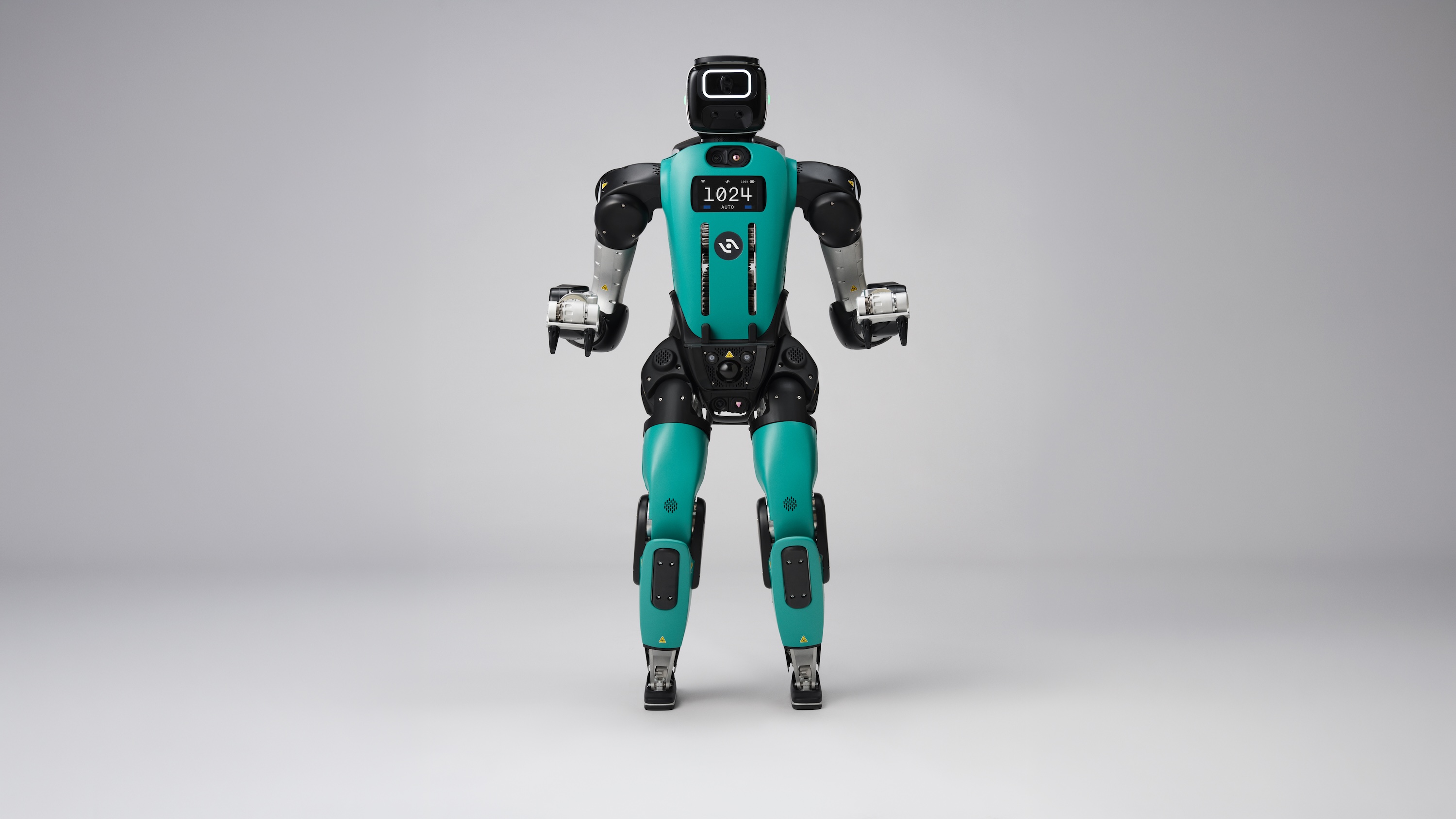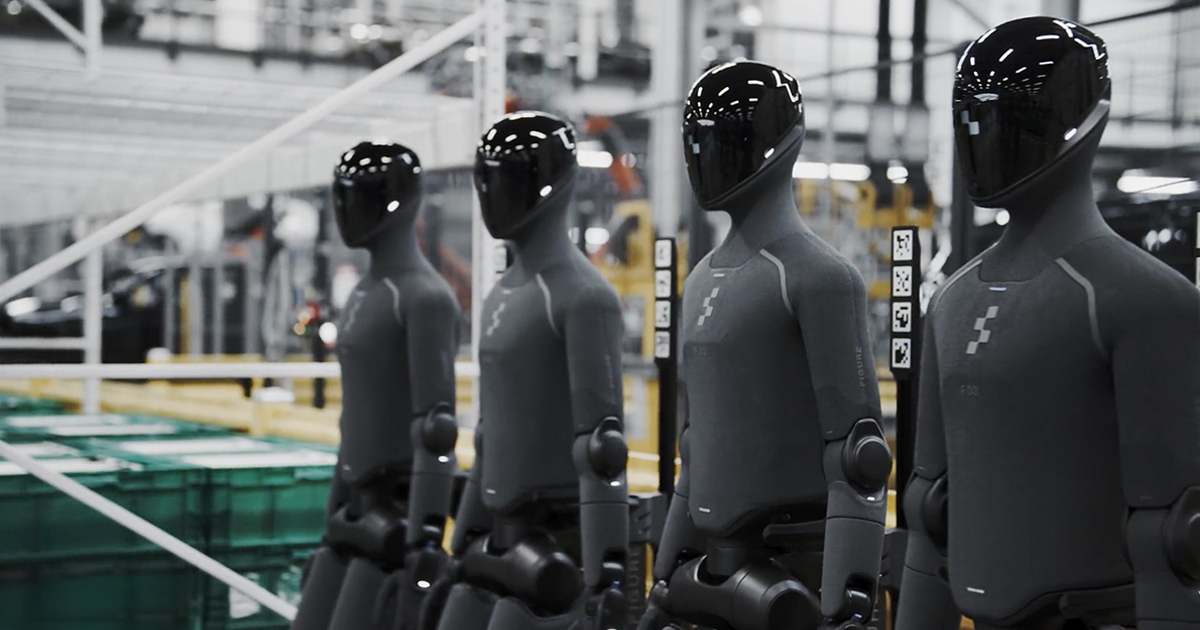
Figure's June 30, 2026 account of Figure 03 at BMW's Spartanburg plant links the new robot with Helix 02 and logistics work. BMW's own project announcement provides the customer-side context. This is an important progression from the earlier Figure 02 programme, but it should not be reported as a simple continuation of an identical test. A changed body, control system or task changes what must be demonstrated. The prior experience informs the next project; it does not remove the need for fresh evidence. Figure 03 at BMW, June 30, 2026.
A trial, a production assignment, then a new task
The earlier programme had more than one phase. BMW's August 2024 report covered several weeks of testing and said the robots had left the plant. Its June 2026 account described subsequent Figure 02 work during 2025: sheet-metal insertion for welding, supporting more than 30,000 X3 vehicles over ten months. The same release quoted Figure describing an eleven-month deployment. Those are the companies' stated periods, rather than interchangeable measurements of uninterrupted operating time. BMW's 2024 report; BMW's June 2026 account.
That chronology is stronger evidence than a demonstration alone, but the vehicle total needs careful interpretation. It places the robot inside an actual production programme; it does not mean the machine assembled those cars or operated every hour of the period. The reported assignment was one contribution to a much larger process. Keeping that distinction makes the history useful when assessing what has changed in the new logistics application.
From an unsorted container to a sequencing trolley
BMW describes the new sequence in practical terms: components arrive unsorted in larger containers, Figure 03 sorts them into a sequencing trolley, and the trolley reaches a collection point. An automated tugger train or Smart Transport Robot then carries the parts onward for assembly. The humanoid is therefore one stage in a transport and preparation chain. The customer's workflow description.
A tightly defined handling operation can present a component in a relatively predictable way. Logistics often introduces variation in item presentation, order, destination and timing. The robot has to connect recognition with the correct physical action and the correct place in the material flow. A manipulation success can still be an operational error if the item goes to the wrong sequence or destination. This makes the interface with production information as important as the robot's ability to grip.
Figure's June 30 demonstration adds the physical detail: handling individual thin-walled parts and pulling a large wheeled metal cart. Its account says Helix 02 coordinates stepping, balance and manipulation as part positions vary. These are company-reported capabilities from the demonstrated workflow, not a disclosed fleet reliability result. Figure's demonstration account.
Why whole-body control matters here
Pulling a cart and placing a delicate component impose different demands. One involves force through a moving load; the other depends on contact and placement precision. The transition is the interesting engineering problem. A controller cannot treat the feet as an unrelated transport mechanism if changes in stance determine whether the hands can reach and control the object. This is why the logistics setting offers a more revealing test of the humanoid form than a stationary pickup presented in isolation.
Figure's April 2026 production update described its manufacturing ramp for Figure 03, while the January Helix 02 release described whole-body autonomy. These are distinct dimensions of readiness. Producing more bodies can support testing and deployment, but does not establish the reliability of every skill. A more capable controller can expand possible tasks, but does not establish that an installed workflow meets a customer's requirements. The BMW project is where those dimensions have to meet a real operating need. Figure 03 production update, April 29, 2026; Helix 02 full-body autonomy, January 27, 2026.
Figure's April production report put a number on the hardware ramp: more than 350 third-generation robots produced, with a demonstrated cycle time of one robot per hour. It also said robots were allocated across research, data collection, household work and commercial development. The production total is consequently not a count of customer installations, much less of robots working at BMW. Figure's production and allocation account.
The customer record sets the operating boundary
A supplier naturally emphasizes what the robot can do. A customer can clarify what work was actually assigned, how long it ran and what changes were needed in the surrounding process. Both perspectives are useful, but they answer different questions. A complete account should identify the trial boundaries, whether staff supervised the operation continuously and which exceptions required intervention. Without those details, a broad phrase such as production deployment can cover very different levels of maturity.
The change of task also affects comparison with conventional automation. A humanoid may be attractive if several tasks share human-scale access and change often enough to make fixed equipment less convenient. A dedicated system may remain better for a stable, high-volume movement. The relevant comparison is the cost and reliability of the whole workflow, including changeovers and integration. A successful robot at one station does not establish that the same form factor is best for the next station.
For this application, the decisive error can occur after a mechanically successful pick. A part in the wrong trolley position may be intact and firmly placed, yet fail the sequencing requirement. Conversely, waiting for the correct destination to become available may be appropriate behavior rather than a robot fault. The operating record needs to distinguish these cases because improving grasp speed would not resolve an identity or coordination error.
What an expansion decision would establish
Commissioning itself can produce valuable evidence. The time needed to define the task, connect production information, validate behavior and train staff is part of the cost of adding the robot. If that effort falls for a second similar station, it would support the claim that the platform is becoming easier to deploy. If every station requires extensive custom work, the hardware may be reusable while the operational solution remains highly specific. Both outcomes are worth reporting accurately.
The next useful milestone is a record of the complete container-to-trolley sequence across ordinary production variation, with the handoff to transport included. BMW and Figure have supplied a concrete application and a history of earlier work. What remains to be established publicly is how consistently the new combination of body, controller and logistics interfaces performs that application. The company announcements support a progression in development; they do not yet settle its operating economics or the ease of repeating it elsewhere.
Sources & evidence
This archive preserves its original editorial date. Sources describe the events and announcements discussed; they do not establish today’s status.