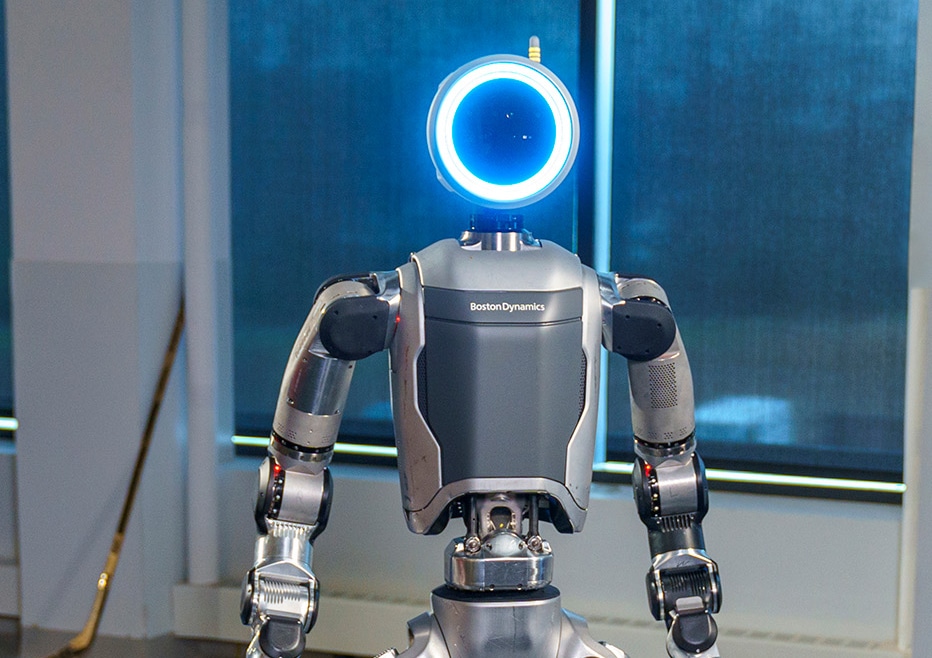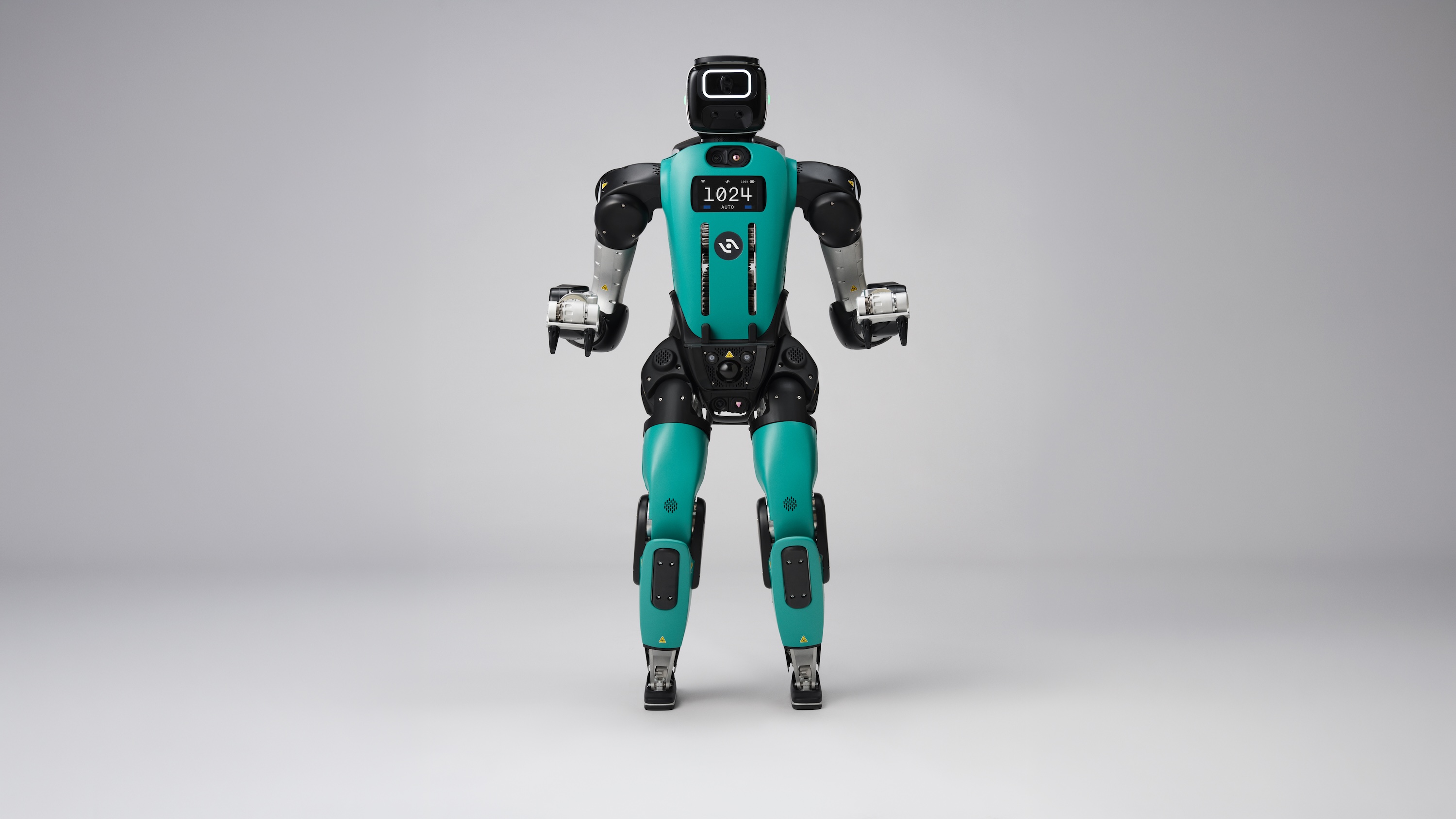
Agility's September 2026 Digit 5 announcement describes a 90-minute runtime battery system that charges in nine minutes. Boston Dynamics' January Atlas product announcement instead describes autonomous battery swapping. Both approaches target the same industrial problem: keeping a robot available without requiring a person to manage every energy interruption. These are manufacturer specifications and design claims, not a direct comparison under identical workloads. The work being performed matters as much as the charging method. Digit 5 announcement, September 15, 2026; Atlas product announcement, January 5, 2026.
The battery does not define the shift
A robot's productive time depends on more than the interval between charges. It can wait for a part, pause for a person, lose time to a poor grasp or require a software reset. A fast charger addresses one source of delay. A battery exchange station addresses it differently, while introducing its own equipment and coordination requirements. Neither eliminates the other sources. Reporting energy performance as total labor capacity therefore risks converting one useful specification into a much larger unsupported claim.
Figure 03's October 2025 introduction adds a third design emphasis, including wireless charging among the changes intended for home use. The different choices reflect different anticipated environments. An industrial cell can reserve space and schedule charging around material flow. A home has less predictable access, different supervision and greater sensitivity to where equipment can be placed. A charging design that is practical in one setting may create an inconvenience in another. The comparison should start with the operating environment rather than declaring one mechanism universally superior. Figure 03 introduction, October 9, 2025.
Energy infrastructure becomes part of the robot system
A charger or exchange station needs power, clear access and a recovery procedure. If multiple robots share it, their schedules interact. A short charging duration can still produce a queue if many machines need it together. Conversely, a longer charge may have little effect if it occurs during a natural break in the work. The useful unit is the complete work cycle, including the trip to the station and the return to a productive state. That cycle should be measured under representative demand.
The energy strategy also affects maintenance. Batteries age, contacts wear and sensors can misidentify a completed connection. A robot must recognize when charging or exchange did not succeed and avoid beginning a task with an incorrect estimate of remaining energy. That requirement becomes more demanding if the task cannot be interrupted safely at an arbitrary moment. A robot carrying a load or working in a constrained area needs enough margin to reach an appropriate state, not merely enough energy to remain powered.
Availability should be reported honestly
Digit 5's early access is planned for 2027, so its published energy figures belong to a forthcoming product rather than a mature installed fleet. Atlas' product launch likewise does not substitute for customer shift data. A credible operational report would separate charging, idle time, scheduled service and unexpected stoppages, while recording the completed work. The practical implication is straightforward: better energy handling can remove an important bottleneck, but it becomes economically meaningful only when the rest of the robot and workflow can use the recovered time.
A headline runtime does not describe how a humanoid fits into a working shift. The useful measure is the amount of completed work between preparation, charging, interruption and maintenance. Autonomy must manage those transitions or make them straightforward for the people responsible for keeping the operation moving. Boston Dynamics introduced an all-electric Atlas in 2024. Boston Dynamics introduces electric Atlas.
Build a complete shift
A site trial should record the whole cycle. How much time is spent waiting for work, walking between stations or recovering from an unsuccessful action? How is charging scheduled when demand changes? These questions let operators compare the machine's availability with the actual rhythm of the process.
Computing architecture belongs in the same discussion. Running a model on the robot may change the role of network connectivity, but it does not prove that the entire service is independent of remote systems. Authentication, updates, task assignment and support can still introduce external dependencies. Google DeepMind announced an on-device robotics model in June 2025. Google DeepMind's on-device robotics model.
Distinguish local compute from independence
The evaluation should therefore distinguish the physical energy budget from the service budget. A robot can have charge remaining while being unable to accept work, or be operationally available only because a person is performing unseen support tasks. Both conditions matter when translating a demonstration into a staffing or throughput plan.
A credible operating report shows when the machine was ready, what prevented work and how it returned to service. That evidence is more useful than a single maximum-runtime figure. It also reveals whether a particular humanoid is best suited to intermittent assistance, a structured shift or some narrower role.
Energy comparisons should also preserve the payload and movement profile. Carrying a heavy object, standing still and performing repeated reaches are not equivalent workloads. A runtime figure measured under one profile cannot be transferred unchanged to another. The customer needs enough detail to relate the specification to the intended task. Otherwise, an apparently precise number can conceal a large uncertainty in daily output, and a comparison between charging systems can reward whichever demonstration used the lighter work.
Sources & evidence
This archive preserves its original editorial date. Sources describe the events and announcements discussed; they do not establish today’s status.