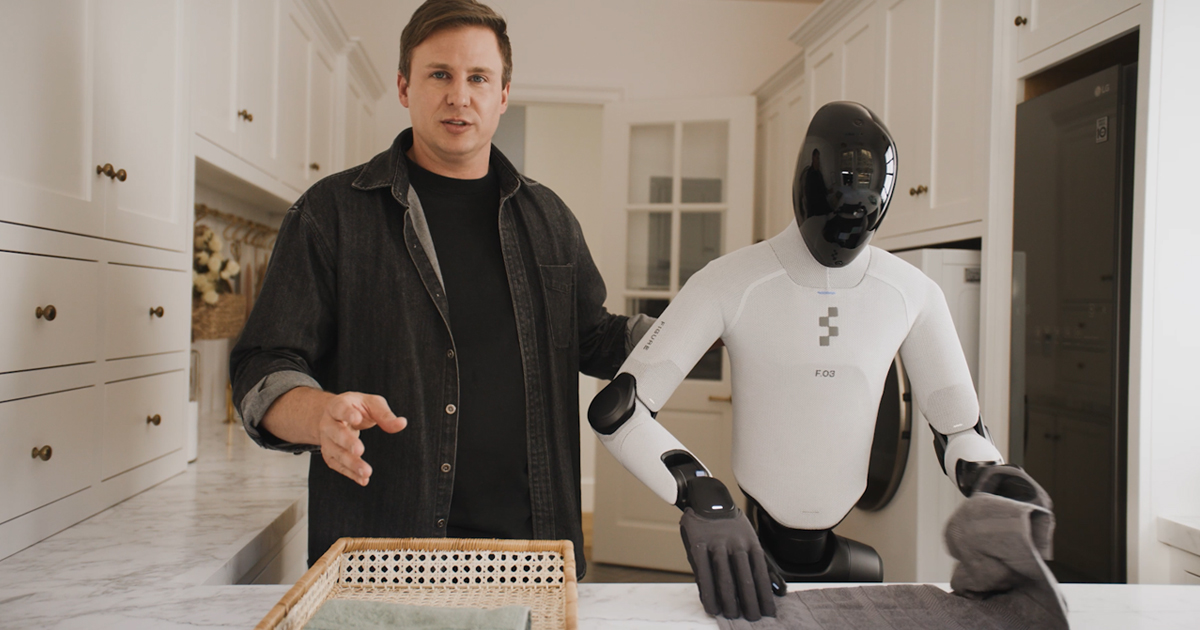
Figure introduced Figure 03 in October 2025 with a redesigned sensory system and hands intended to support its Helix controller. Its January 2026 Helix 02 release highlighted tactile sensing and palm cameras as part of the manipulation system. These developments make the hand question more interesting than a count of fingers or joints. Dexterity depends on what the robot can learn about contact while it acts, and whether its controller can use that information before a small error becomes a dropped or damaged object. Figure 03 introduction, October 9, 2025; Helix 02 full-body autonomy, January 27, 2026.
A hand is also a measurement system
A camera outside the hand can lose sight of the contact point as the fingers close. Sensing near the contact can provide another view of what is happening. But adding a sensor does not automatically create a reliable skill. The information must be timely, correctly interpreted and connected to a useful adjustment. A hand that detects a slip but cannot change force or position appropriately has observed the problem without solving it. The combined hardware-and-control system is therefore the relevant unit of comparison.
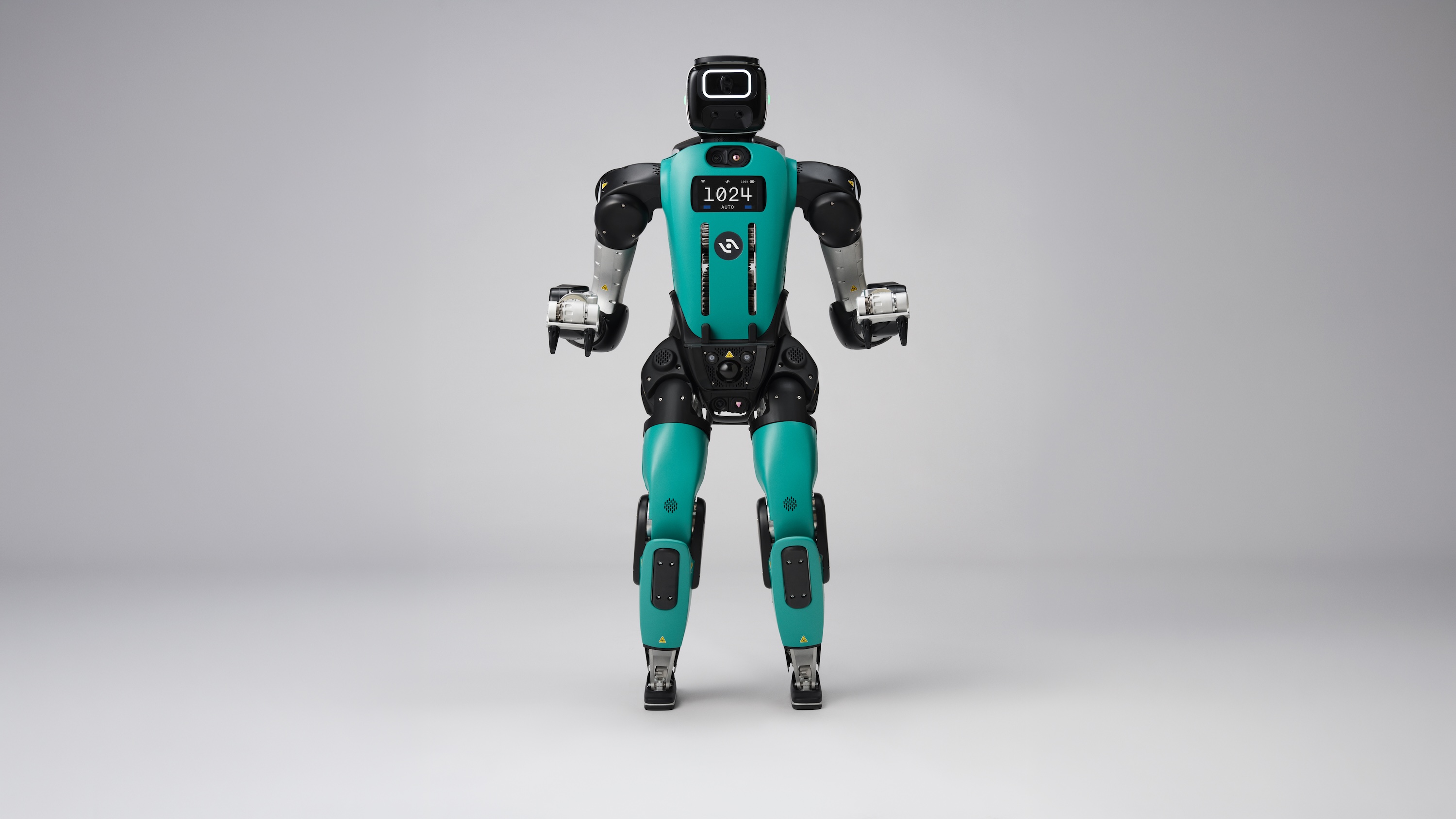
Agility's Digit 5 product direction offers a different emphasis: swappable end effectors for different jobs. That is not inherently less sophisticated than a five-fingered hand. A tool matched to a constrained task can simplify control and improve consistency, while a more general hand may reduce the need to change tools as tasks vary. The tradeoff depends on the objects, required contact and tolerated failure modes. Comparing humanoids by visual resemblance to a human hand misses this engineering choice. Digit 5 product description.
Objects expose the limits
A useful dexterity evaluation includes objects that differ in rigidity, friction, shape and fragility. It also changes how they are presented. A tool may work well when a component is isolated and aligned, then struggle when it is partly occluded or touching another object. A soft item introduces another challenge: its shape changes as it is grasped. The relevant question is not whether one successful example exists. It is how reliably the system handles the range of conditions the customer actually encounters.
Recovery belongs in that evaluation. A robot that can recognize a poor grip, set the object down and try a different approach may be more useful than one that completes an ideal motion quickly but cannot recover. The time spent recovering still matters, and the recovery must not create a new hazard. Yet treating all retries as equivalent failure would miss a meaningful capability. Human work includes correction; useful robot work needs an explicit, measurable form of it.
The demonstration needs an operating envelope
Figure's releases establish the company's hardware and software approach. They do not supply a universal success rate for every object class or industrial task. A customer-facing result should state which objects were used, how they were arranged, what counted as success and whether human assistance was allowed. It should also distinguish a manipulation skill from the larger job around it. Picking up a part is one stage; placing it correctly, confirming the result and handing control to the next process complete the useful action. The humanoid hand earns its value through that whole sequence.
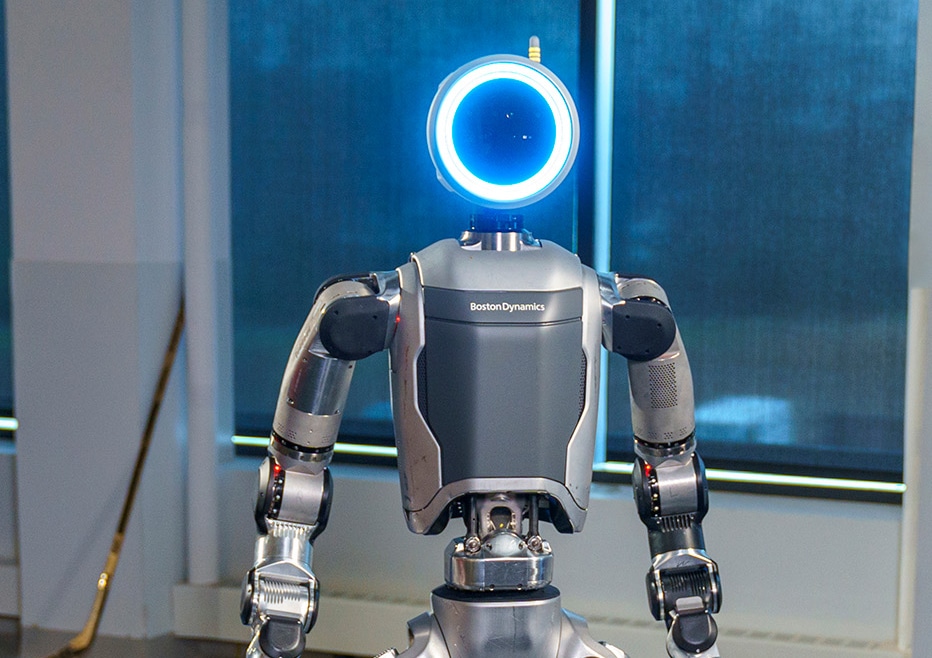
The visual appeal of a robotic hand can obscure the practical problem it must solve. An industrial user needs a machine to acquire, retain and release particular objects reliably. Whether a hand looks human matters less than whether its design fits those objects and the consequences of dropping or misplacing them. Boston Dynamics describes gripper development and full-body control as Atlas research priorities. Boston Dynamics on Atlas development.
Define the grasping problem
A useful specification describes object shape, surface, weight distribution and presentation. A neatly arranged part differs from the same part tilted in a bin. A grasp that succeeds once under ideal placement does not establish a dependable operating envelope across ordinary variation in the workplace.
Testing should include the end of the grasp. The robot may hold an object securely yet struggle to place it without snagging, shifting nearby items or retaining material in the gripper. Releasing correctly is part of manipulation, and the receiving process should define what a successful placement means. ALOHA 2 describes hardware designed for bimanual teleoperation. ALOHA 2 research paper.
Measure release and recovery
Recovery adds another dimension. When a grasp is uncertain, the system needs a bounded response: try a permitted alternative, set the object down, or request assistance. Repeatedly squeezing or repositioning without a clear stopping rule can turn a recoverable miss into damaged work or a more difficult intervention.
The result is a task-based comparison rather than a beauty contest among hands. Buyers should ask for evidence across the objects they actually use, including unsuccessful attempts and wear over time. A simpler end effector may be the more useful choice if it completes the required work predictably.
Wear deserves the same attention as initial dexterity. Contact surfaces, finger mechanisms and sensors operate under repeated physical stress. A hand that performs well when newly calibrated may behave differently after extended use or a minor collision. The useful operating record therefore includes maintenance and recalibration, along with successful grasps. This is especially important when the business case depends on long periods of unattended work: the system must recognize declining performance before a sequence of small handling errors becomes a larger production problem.
Sources & evidence
This archive preserves its original editorial date. Sources describe the events and announcements discussed; they do not establish today’s status.